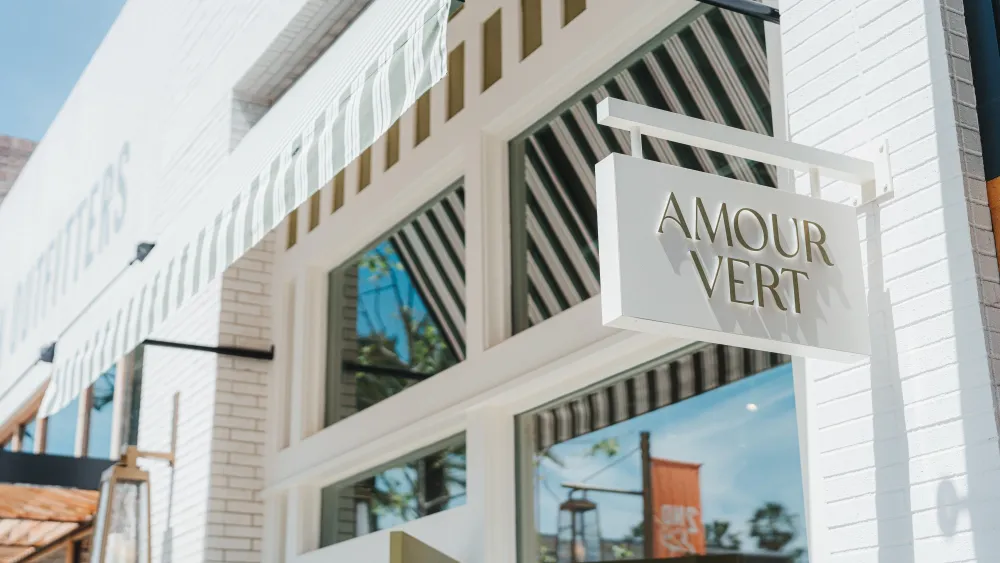
In an era where fast fashion dominates the retail landscape and environmental concerns grow more pressing by the day, a quiet revolution is taking place in the apparel industry. Among the pioneers of this movement stands a San Francisco-based brand that has been challenging conventional fashion paradigms since its inception. Amour Vert, which translates to “green love” in French, has emerged as more than just a clothing company; it represents a fundamental shift in how we think about the clothes we wear and their impact on our planet.
The Genesis of a Sustainable Vision
Founded in 2010 by Christoph Frehsee and Linda Balti, Amour Vert was born from a simple yet powerful question: Why can’t fashion be both beautiful and sustainable? At a time when sustainable fashion was often synonymous with shapeless, uninspiring designs, the founders recognized a critical gap in the market. Women who cared about environmental issues shouldn’t have to compromise on style, fit, or quality to align their wardrobes with their values.
Amour Vert brand’s origin story reflects a deep commitment to environmental stewardship that goes beyond mere marketing. Frehsee and Balti understood that true sustainability requires a complete reimagining of the fashion supply chain, from fiber selection to manufacturing processes, and from packaging to end-of-life considerations. This holistic approach would become the cornerstone of the brand’s identity and its competitive advantage in an increasingly crowded sustainable fashion marketplace.
The Pillars of Sustainable Practice

What sets Amour Vert apart from both conventional fashion brands and many of its eco-conscious competitors is its comprehensive approach to sustainability. The company operates on several fundamental principles that guide every decision, from design to delivery.
Material Innovation and Selection
Amour Vert heart of the brand’s environmental commitment lies its meticulous selection of materials. The company works exclusively with sustainable fabrics, with a particular emphasis on non-toxic, natural fibers. Their signature fabric, a proprietary modal derived from beechwood trees, exemplifies this commitment. Unlike conventional textiles that require extensive chemical processing and enormous quantities of water, this innovative material is produced using a closed-loop system that recycles water and solvents, dramatically reducing environmental impact.
Beyond modal, the brand incorporates organic cotton, linen, Tencel, and recycled materials into its collections. Each fabric choice is made with careful consideration of its environmental footprint, including factors such as water usage, chemical inputs, biodegradability, and the working conditions of those who produce it. This attention to material sourcing ensures that every garment begins its life with the smallest possible ecological footprint.
Domestic Manufacturing and Transparency

Amour Vert industry where offshore production has become the norm, Amour Vert has taken a decidedly different path. The company manufactures its entire collection in California, primarily within the San Francisco Bay Area. This decision serves multiple purposes: it ensures fair labor practices and living wages for workers, reduces the carbon footprint associated with international shipping, and allows for greater quality control and oversight of production processes.
This commitment to local manufacturing also provides unprecedented transparency. Customers can trace their garments back to the specific facilities where they were made, understanding the full journey of their clothing from concept to closet. In an age where consumers increasingly demand accountability from the brands they support, this level of openness builds trust and demonstrates genuine commitment rather than superficial greenwashing.
The Revolutionary Tees for Trees Program
Amour Vert no initiative better encapsulates the brand’s values than its Tees for Trees program. For every tee shirt purchased, Amour Vert plants a tree in North America through a partnership with American Forests, one of the nation’s oldest conservation organizations. Since the program’s inception, the company has planted hundreds of thousands of trees, creating tangible environmental benefits that extend far beyond the fashion industry.
Amour Vert initiative transforms every purchase into an act of environmental restoration. Trees planted through the program sequester carbon dioxide, combat climate change, restore wildlife habitats, prevent soil erosion, and improve air and water quality. The program demonstrates that commerce and conservation need not be at odds; rather, business can serve as a powerful vehicle for positive environmental change.
Design Philosophy: Where Style Meets Sustainability
One of the most common misconceptions about sustainable fashion is that environmental consciousness requires aesthetic compromise. Amour Vert has spent over a decade systematically dismantling this notion. The brand’s design philosophy centers on creating timeless, versatile pieces that transcend seasonal trends and remain relevant year after year.
Amour Vert collections feature clean lines, sophisticated silhouettes, and a color palette that emphasizes versatility and wearability. Rather than chasing fleeting fashion moments, the design team focuses on creating wardrobe essentials that can be mixed, matched, and styled in countless ways. This approach not only ensures that garments remain in rotation longer, reducing waste, but also provides customers with better value and more sustainable consumption patterns.
The fit and quality of the garments reflect the brand’s commitment to creating clothes that last. By investing in superior construction techniques and premium materials, the company produces pieces that withstand repeated wear and washing without losing their shape, color, or appeal. This durability stands in stark contrast to fast fashion items designed for obsolescence, offering a more economically and environmentally sound alternative.
The Business Model: Proving Sustainability’s Viability

Amour Vert has done more than create beautiful, sustainable clothing; it has demonstrated that ethical fashion can be commercially viable. In an industry notorious for razor-thin margins and cutthroat competition, the brand has carved out a profitable niche by appealing to conscious consumers willing to invest in quality and values.
Amour Vert company’s business model challenges the conventional wisdom that cheap, overseas production is the only path to profitability in fashion. By focusing on quality over quantity, building customer loyalty through genuine commitment to values, and maintaining reasonable pricing that reflects true costs, the brand has achieved something remarkable: sustainable growth built on sustainable practices.
Amour Vert success sends a powerful message to the broader fashion industry. It proves that transparency, ethical labor practices, and environmental stewardship are not impediments to profitability but potential competitive advantages. As consumer awareness of fashion’s environmental impact grows, brands that have built their foundations on sustainable principles find themselves well-positioned for the future.
Challenges and the Path Forward
Despite its successes, the brand faces ongoing challenges inherent to operating sustainably in a system designed for the opposite. Domestic manufacturing costs more than offshore alternatives. Sustainable materials often carry premium price tags. Competition from fast fashion brands with massive marketing budgets and rock-bottom prices remains fierce.
Additionally, the very definition of sustainability continues to evolve as we learn more about fashion’s environmental and social impacts. Issues such as microplastic pollution from synthetic fabrics, the true biodegradability of “natural” materials treated with chemicals, and the carbon footprint of e-commerce all demand ongoing attention and innovation.
Amour Vert brand has responded to these challenges with continued innovation and transparency. Recent initiatives have focused on circularity, exploring ways to extend garment lifecycles through repair programs and eventual recycling. The company has also increased its use of organic cotton and other regenerative fibers that not only minimize harm but actively improve soil health and sequester carbon.
The Ripple Effect: Influencing an Industry
The impact of Amour Vert extends far beyond its own collections. As a visible success story in sustainable fashion, the brand has influenced both consumers and competitors. It has helped educate customers about the true cost of fast fashion and demonstrated that alternatives exist. For other brands, it serves as a proof of concept that sustainability and profitability can coexist.
Major fashion houses and retailers have taken notice, with many launching their own sustainable lines or initiatives in response to changing consumer demands. While some of these efforts represent genuine commitment and others amount to greenwashing, the overall shift in the industry conversation reflects the influence of pioneers who proved sustainable fashion could work.
The Consumer’s Role in Sustainable Fashion
The brand’s success ultimately depends on consumers making different choices. This requires a fundamental shift in how we think about clothing, from disposable commodities to valued investments. It means considering the full lifecycle of a garment, asking questions about where and how it was made, and supporting companies that align with our values even when cheaper alternatives exist.
Education plays a crucial role in this transformation. As consumers learn more about fashion’s environmental impact—the industry accounts for significant global carbon emissions, water pollution, and textile waste—many are seeking alternatives. Brands that can combine this desire for sustainability with the quality and style consumers expect are positioned to lead the next generation of fashion.
Looking Ahead: The Future of Fashion
The fashion industry stands at a crossroads. Climate change, resource scarcity, and growing social consciousness demand fundamental changes in how we produce and consume clothing. Brands that embrace this reality and work proactively to create more sustainable systems will thrive, while those clinging to outdated models face increasing pressure from both consumers and regulators.
The trajectory of Amour Vert over the past decade offers a glimpse of fashion’s potential future: an industry where beauty and sustainability coexist naturally, where transparency is standard rather than exceptional, and where commercial success and environmental stewardship reinforce rather than contradict each other. This vision represents not just a niche market but a fundamental reimagining of what fashion can and should be.
Conclusion: Love for What We Wear and Where We Live

The story of Amour Vert is ultimately about more than fashion. It represents a different way of doing business, one that recognizes the interconnection between commercial activity and environmental health. The brand’s name—green love—captures this ethos perfectly. It speaks to love for beautiful clothing and love for the planet that sustains us, suggesting these loves need not be separate but can and should be one and the same.
As we face increasingly urgent environmental challenges, every industry must reckon with its impact and reimagine its practices. Fashion, with its significant environmental footprint and its intimate connection to self-expression and culture, occupies a unique position in this transformation. Brands that lead the way, demonstrating that another path is possible and profitable, play a crucial role in shaping the industry’s future.
For consumers seeking to align their wardrobes with their values, the existence of brands committed to genuine sustainability offers hope and practical alternatives. Each purchase becomes an opportunity to support a different vision of fashion’s future, one where the clothes we love don’t come at the planet’s expense. In this way, sustainable fashion represents not just an industry trend but a small part of the larger shift toward more conscious, sustainable ways of living on our shared planet.
The journey toward truly sustainable fashion continues, with new challenges emerging as old ones are addressed. Yet the path forward has been illuminated by pioneers willing to do things differently, proving that fashion can be both beautiful and responsible. As this movement grows, it brings us closer to a future where all fashion is sustainable fashion, and where the love we express through what we wear extends to the world around us.
About the Author